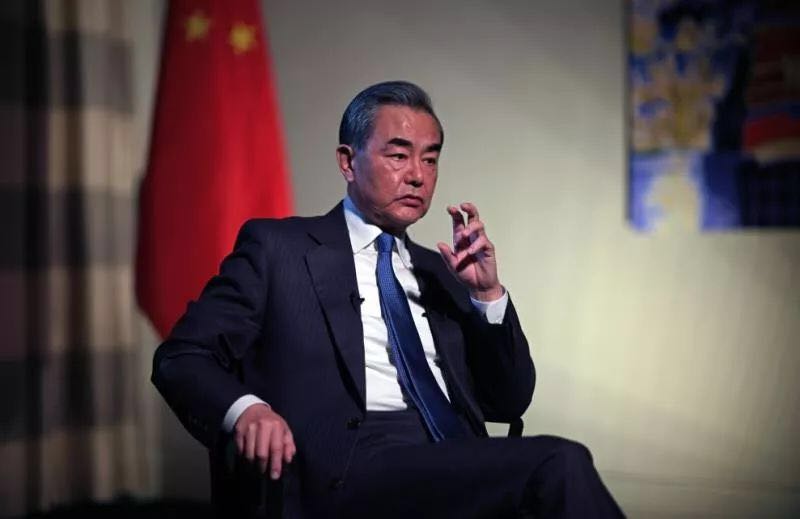
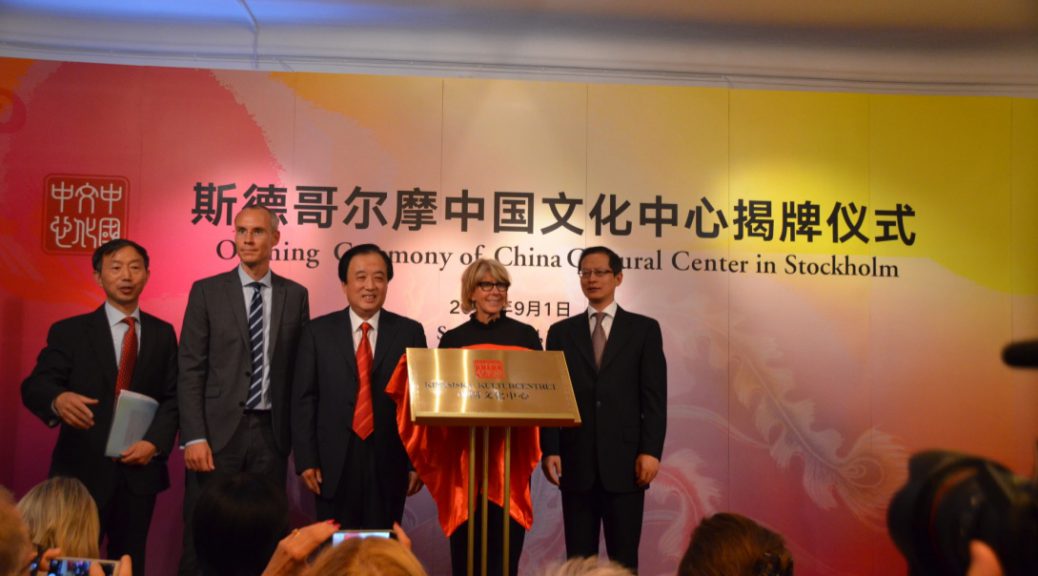
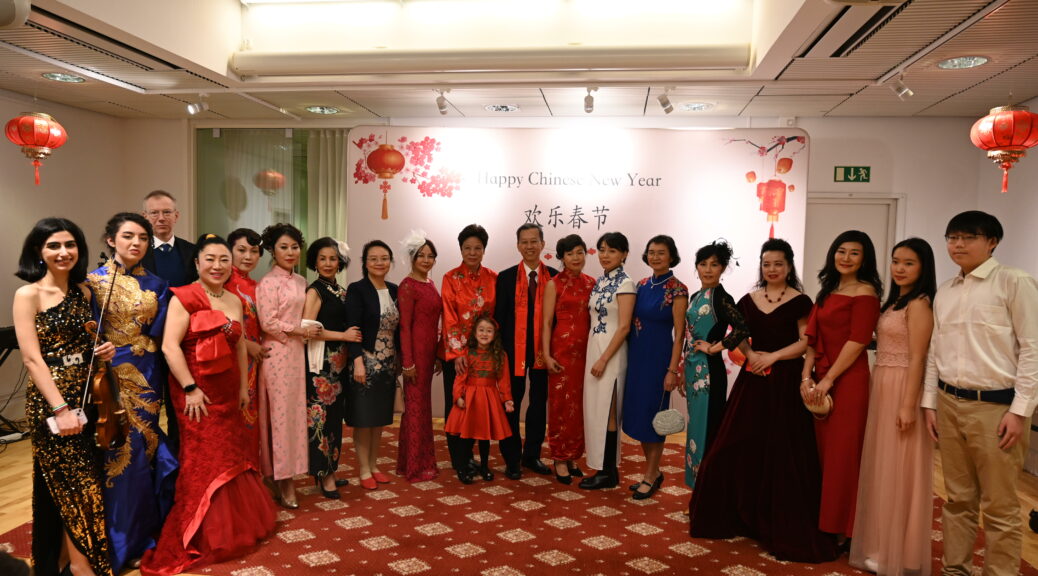
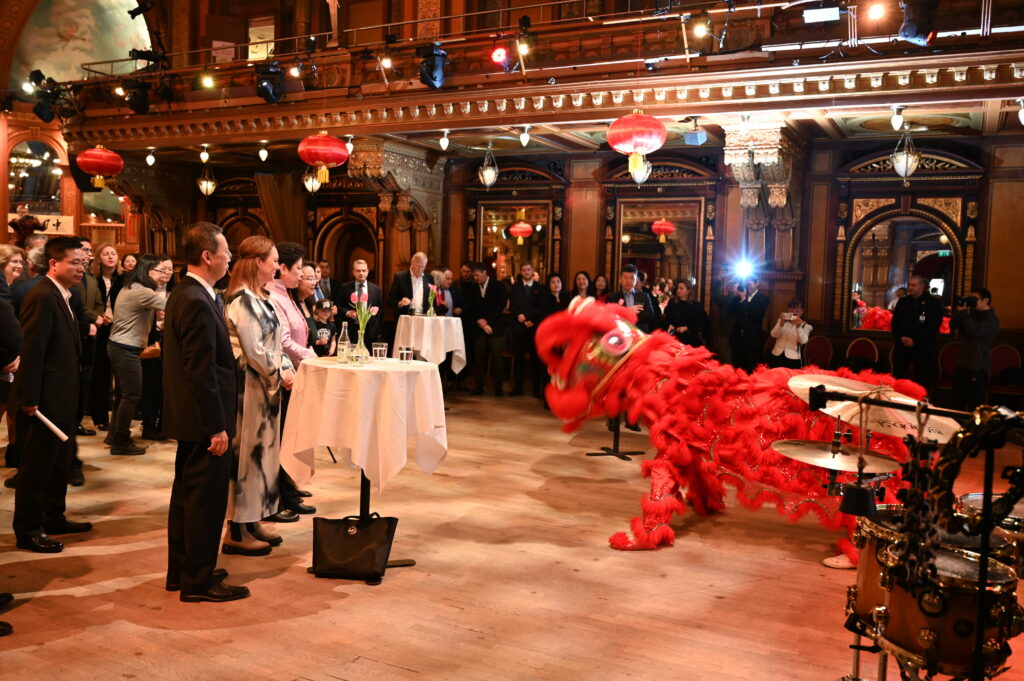
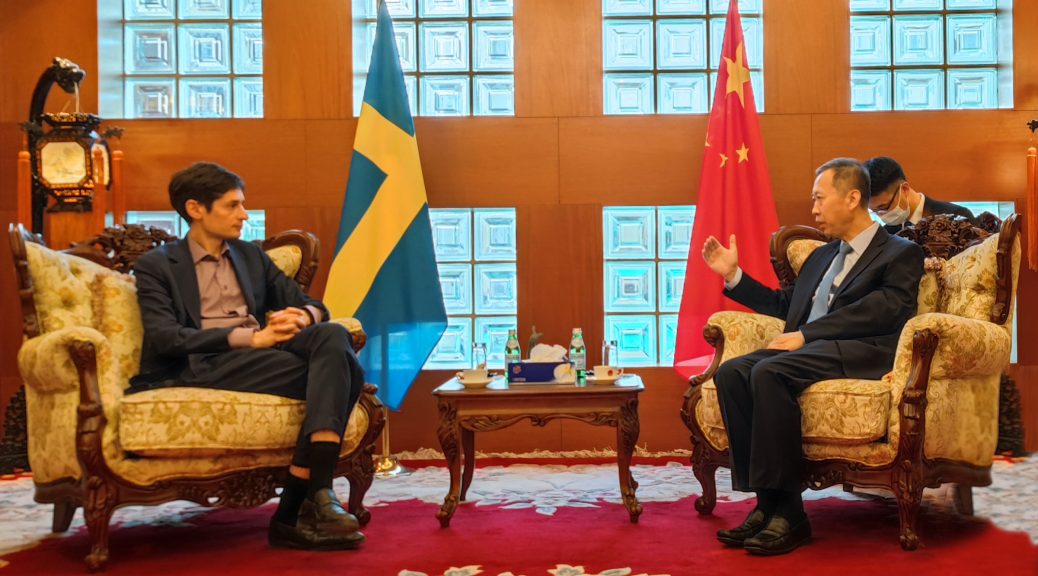
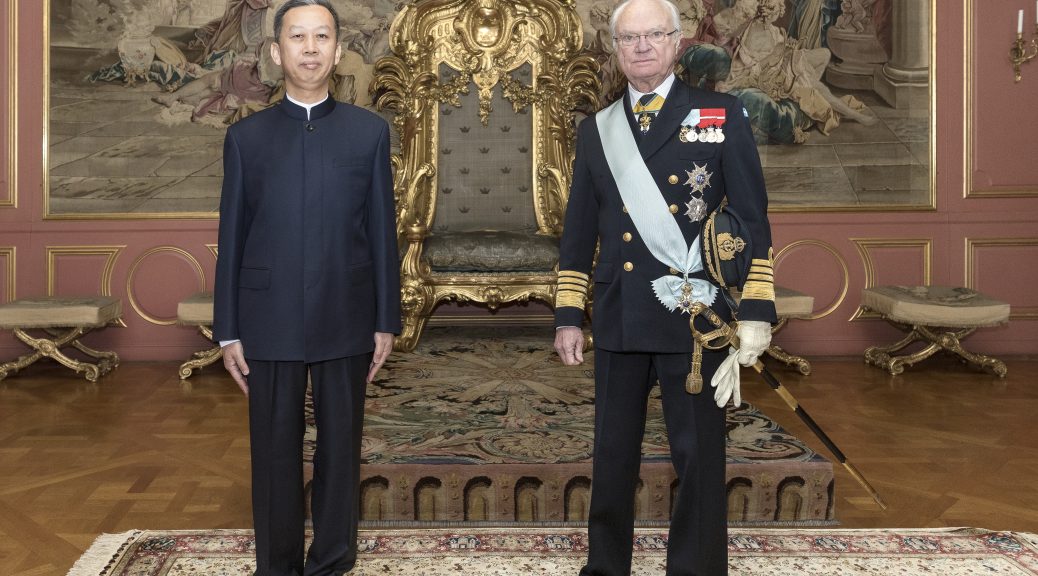
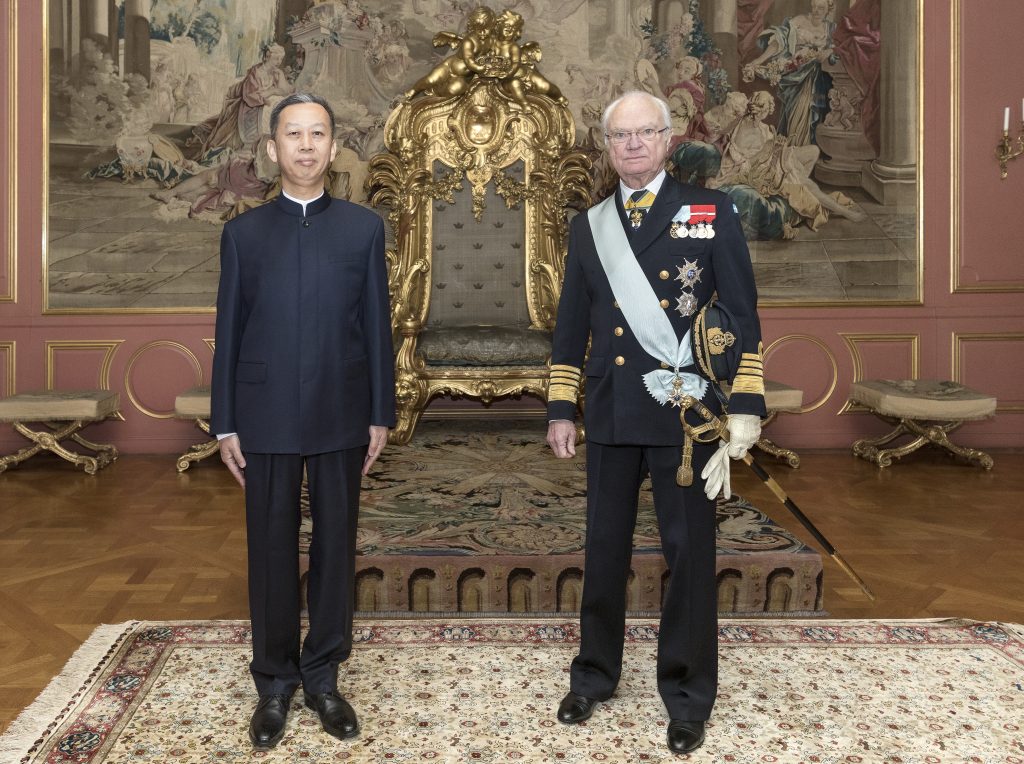
Kungliga slottet, Stockholm. Högtidliga audienser tisdagen den 15 februari 2021. Kinas ambassadör Mr Cui Aimin.
Med anledning av coronapandemin hölls ceremonin i mindre skala och var anpassad efter den rådande situationen.
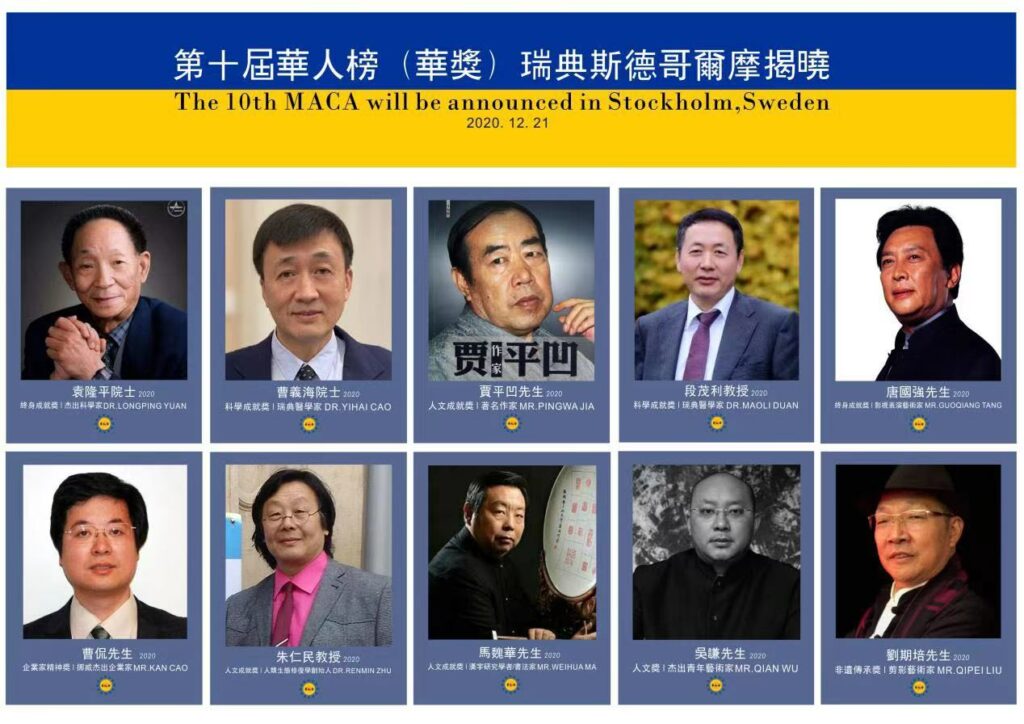
吴谦先生“华人榜·人文奖”;青年艺术家吴谦毕业于纽约大学社会与文化分析学院,并获得哥伦比亚大学东亚研究所硕士学位。2011年至今,吴谦以综合材料为媒介,在画布上以东方美学为本,表达“东西遇合”的文化意识和水墨艺术的精神蕴涵。作为东西方艺术的摆渡人,吴谦以“结合传统与现代 融会东方与西方”作为基本创作理念,他的作品从东方隐忍的禅意渐变为宏大多维的情绪表达。吴谦曾在纽约、厦门、上海和杭州等地举办个展,作品入选第十三届全国美展综合材料绘画作品展、第三届全国综合材料绘画双年展、脉—中国当代绘画展等群展。吴谦入选第十三届“全美十大华人杰出青年”榜单,被评为罗博报告2020“Best of the Best 罗博之选”年度青年艺术家。
Beijing, Nov. 12(Greenpost)–China-Europe freight trains, a flagship project and signature brand of the Belt and Road Initiative (BRI), are now carrying full loads in both directions, with return trips slightly outnumbering outbound journeys, officials said here Wednesday.
The service operated 18,661 trains and carried 1.865 million TEUs (Twenty-foot Equivalent Units) in the first 10 months of 2026, up 14.6 percent and 11.2 percent year on year, respectively, Liang Linchong, an official with the National Development and Reform Commission, told a press conference.
Return trains totaled 9,360, against 9,301 outbound during the period, and the loaded container ratio has stayed at 100 percent for 50 consecutive months as of October, according to Liang.
The land network behind the service has also widened. The trans-Caspian line now operates daily, and the northern, central and southern routes of China-Europe freight trains have maintained stable operations.
Liang said the next phase for China-Europe freight trains would focus on four systems: efficient transport, safety governance, diversified routes and innovative development.
Beyond rail, a canal opened this year gives China’s southwestern inland regions a direct route to the sea, and air links now reach 159 cities in 66 BRI partner countries.
China has signed Belt and Road cooperation documents with more than 150 countries and over 30 international organizations, Liang noted.
Growing connectivity has been accompanied by growing trade. In the first three quarters, China’s imports from partner countries grew 17.9 percent, 1.3 percentage points faster than its exports to them, according to official data. Trade with those partners has stayed above half of China’s total goods trade since 2024.
The corridor’s financing arrangements have evolved alongside its traffic. Some 28 countries have endorsed Guiding Principles on Financing the Development of the Belt and Road, and China has promoted a debt sustainability framework for project analysis, Liang said.
Trade rules have expanded as well. China has signed 19 free trade agreements with 25 Belt and Road partner countries and 92 bilateral investment treaties with partners, Song Lihong, an official with the Ministry of Commerce, told the briefing.
In October, the United Nations Convention on Negotiable Cargo Documents, initiated and spearheaded by China, saw 26 countries signing in the first round. The convention creates a negotiable cargo document applicable to all cross-border transport modes.
Beyond large infrastructure projects, smaller ones with tangible benefits for local communities have also expanded. China’s Juncao technology, which uses a type of grass to cultivate edible mushrooms and as livestock feed, is now used in more than 110 countries, and Luban Workshops, China’s vocational education brand, operate 38 sites in 32 countries, among which 36 sites are in Belt and Road partner countries.
It was noted at the briefing that the 15th Five-Year Plan (2026-2030) includes a dedicated chapter on high-quality Belt and Road cooperation. “We will continue to improve the ‘four-in-one’ connectivity network of land, sea, air and cyberspace,” said Liang.
BEIJING, Nov. 9 (Greenpost) — In 2026, the intensifying fallout of global climate change — manifesting in catastrophic flooding, rampant wildfires, and record heatwaves — reaffirms the imperative for immediate, coordinated global action.
With global climate tipping points looming, the 31st United Nations Climate Change Conference (COP31), set to kick off on Monday in Antalya, Türkiye, will offer a new opportunity for the international community to renew momentum for more effective global climate cooperation.
Under the leadership of President Xi Jinping, China has over the years stayed committed to advancing ecological protection and green transition domestically, and promoting international climate cooperation, making major global contributions to the world’s fight against what many regard as an existential threat to humanity.
“LIKE WE PROTECT OUR EYES”
“We should protect the environment like we protect our eyes.” This evocative principle — voiced on various occasions by Xi — frames ecological conservation not merely as a policy choice, but as a vital imperative drawn directly from his own experiences.
“Over four decades ago, I lived and worked for many years in a small village on the Loess Plateau in western China,” Xi recalled in reply to a letter from student representatives of the Global Alliance of Universities on Climate in 2020.
Back then, the ecology and environment there was seriously damaged due to over-development, and the local people were trapped in poverty as a result. That experience has taught him that man and nature are a community of life and that the damage done to nature will ultimately hurt humanity.
An avid reader of Chinese classics, Xi has also been deeply influenced by the traditional Chinese philosophy that views man as an integral part of nature. “All beings flourish when they live in harmony and receive nourishment from nature,” he has said.
This conviction underpins the signature environmental doctrine that “lucid waters and lush mountains are invaluable assets,” which Xi first introduced in 2005 while serving as Party chief of east China’s Zhejiang Province.
Upon becoming General Secretary of the Communist Party of China Central Committee in 2012, Xi made ecological conservation a national priority.
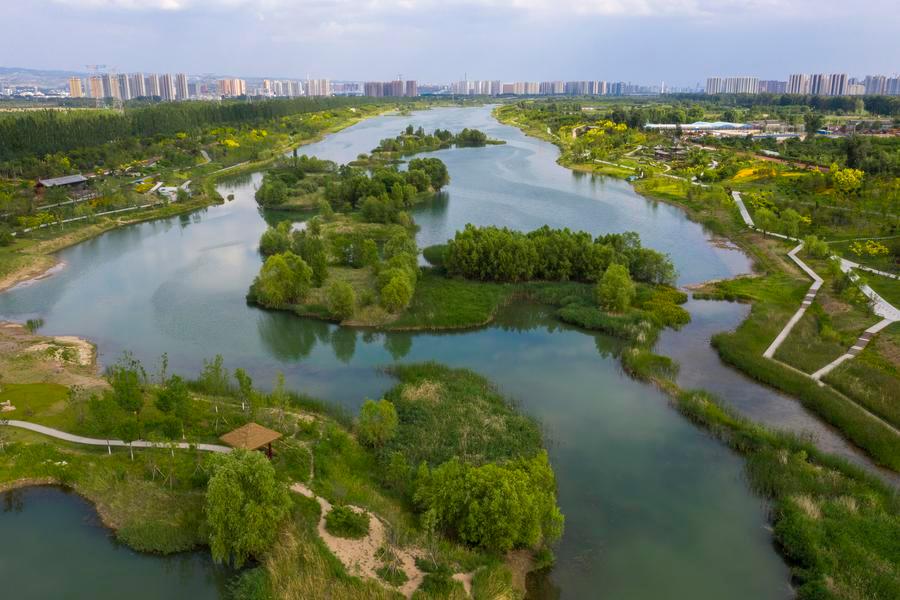
An aerial drone photo taken on June 3, 2024 shows the scenery of the Fenhe River in Taiyuan, north China’s Shanxi Province. (Xinhua/Yang Chenguang)
For Xi, ecological conservation requires not only a profound shift in development philosophy, but also robust institutional safeguards. As he has put it, “Eco-environmental protection relies on laws and regulations.”
At his direction, environmental performance has become a key criterion for evaluating officials, while environmental inspections have reinforced local governments’ accountability for fulfilling their environmental responsibilities. Together, these measures have helped steer China’s economic growth toward a more resource-efficient and sustainable path.
Since 2012, China has sustained a 6 percent average annual economic growth rate while capping an average energy consumption increase to just 3.3 percent. This structural decoupling yielded a 26.1 percent cumulative decline in energy intensity, marking one of the steepest efficiency gains globally.
Xi has also led by example in promoting environmental protection and green development. Since becoming China’s top leader, he has personally participated in tree-planting activities in Beijing for 14 consecutive years.
Forests have the capacity to conserve water, bring in economic benefits, and boost grain production, and now serve well as a carbon sink, he has noted.
Today, China has expanded its forest coverage to over 25 percent of its land area, planting trees across an area roughly 1.7 times the size of California since 2012. The annual carbon-sink capacity of China’s forests and grassland has exceeded 1.2 billion tonnes of carbon dioxide equivalents.
Fuad Gani, vice director of the Graduate School of Sustainable Development at the University of Indonesia, said that China’s ecological conservation philosophy stands out for its ability to translate environmental goals into long-term policies and governance frameworks.
“It is one of China’s most valuable contributions to advancing green transformation on the global stage,” he said.
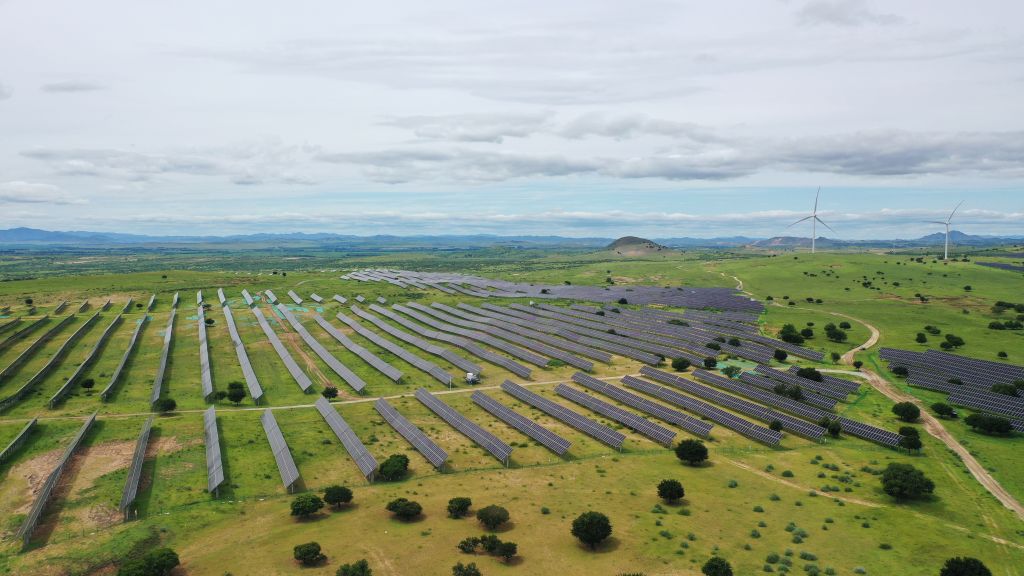
An aerial drone photo taken on July 29, 2025 shows photovoltaic panels at the site of a desertification control project integrated with wind and solar power facilities in Horqin Right Wing Middle Banner of Hinggan League, north China’s Inner Mongolia Autonomous Region. (Xinhua/Ding He)
“SOMETHING WE MUST DO OURSELVES”
Balancing economic growth with green development remains a challenge for economies worldwide, especially emerging markets seeking to meet development needs while pursuing environmental sustainability.
In Xi’s view, economic growth and the green transition are not opposing forces, but complementary goals. This philosophy is captured in his defining doctrine — “lucid waters and lush mountains are invaluable assets.”
Achieving China’s carbon peaking and carbon neutrality goals, Xi has stressed, “is not something that others ask us to do, but something we must do ourselves.”
Under his leadership, China has effectively aligned emissions reduction with technological innovation, industrial upgrading and energy security, turning the green transition into an increasingly important driver of high-quality development.
As early as 2014, when conventional gasoline-powered vehicles still dominated China’s roads, Xi recognized the enormous potential of new energy vehicles (NEVs). During an inspection tour of SAIC Motor, a major Chinese carmaker, Xi depicted developing NEVs as the only way for China to move from a major automobile country to an automobile powerhouse.
In the following decade, the president has demonstrated consistent support for electric cars, visiting automotive companies, touring laboratories, and showing great interest in trying new home-developed models. China’s NEV industry has since grown rapidly, emerging as a flagship of the country’s technology-intensive manufacturing sector.
Beyond the NEV sector, China has also built the world’s largest and most comprehensive clean energy industrial chain, with green and low-carbon industries emerging as an important engine of economic growth.
The growing exports of the “new three” — photovoltaic products, lithium-ion batteries and electric vehicles — are a testament to China’s successful shift toward innovation-driven manufacturing. Beyond its own borders, China is now channeling this green innovation momentum into regional cooperation.
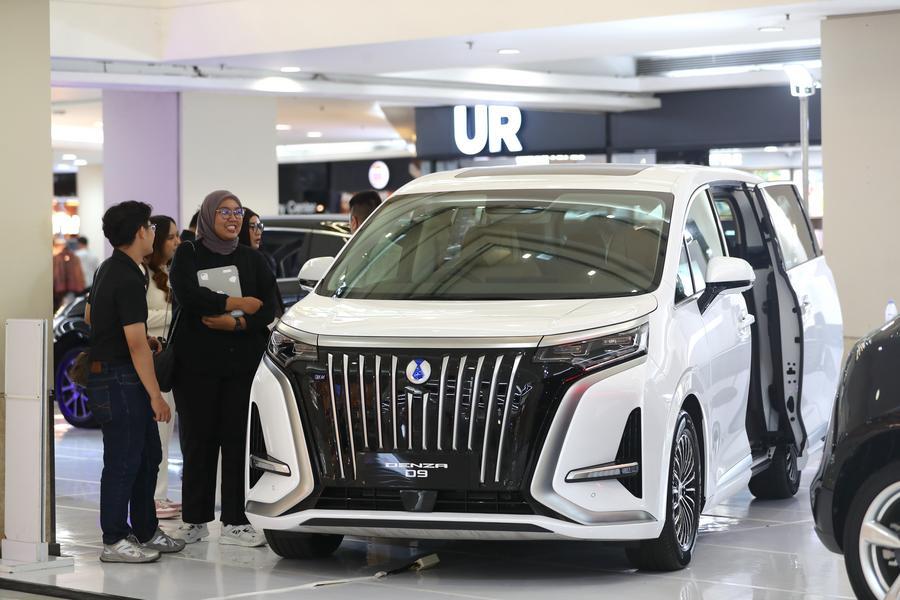
Customers view a Chinese-brand electric car in Jakarta, Indonesia, June 2, 2026. (Xinhua/Cen Yunpeng)
China will continue to work with fellow Shanghai Cooperation Organization (SCO) countries to increase the installed capacity of photovoltaic and wind power each by 10 million kilowatts, and nurture more green industry talents through China-SCO cooperation, said Xi at the 26th Meeting of the Council of Heads of State of the SCO this September.
China’s exports of solar panels, wind turbines, electric vehicles and batteries this year will help the world to avoid 450 million metric tons of carbon dioxide emissions, according to a recent analysis by the Finland-based Centre for Research on Energy and Clean Air.
The development exemplifies China’s strategic push to cultivate “new quality productive forces” — a policy concept first articulated by Xi in 2023 to drive high-tech innovation and sustainable economic modernization. “Green development,” as Xi once put it, “is the defining feature of high-quality development, and new quality productive forces are green in nature.”
China has turned the challenges of addressing climate change into opportunities for technological innovation, industrial upgrading and high-quality economic development, said Wang Lei, a professor at the School of Government of Beijing Normal University.
“Guided by the goals of reducing carbon emissions and strengthening climate resilience, the country has leveraged policy guidance, market incentives and open innovation to drive the transformation of energy, industry, transportation and construction,” he added.
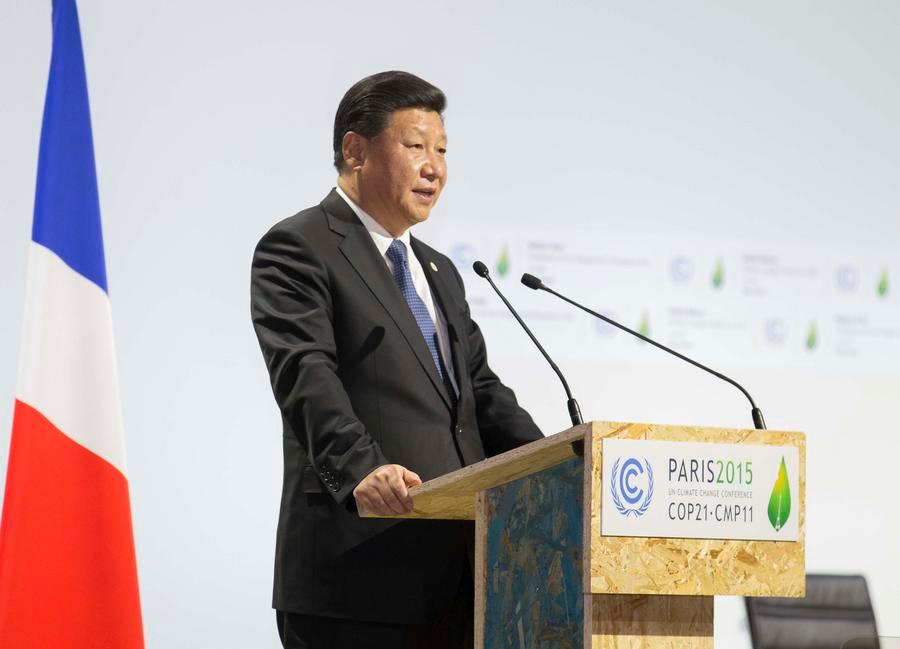
Chinese President Xi Jinping delivers a speech at the opening ceremony of the United Nations (UN) climate change conference in Paris, France, Nov. 30, 2015. (Xinhua/Huang Jingwen)(mcg)
“EXTREME RESOLUTIONS”
Deeply committed to joining world nations to build a community with a shared future for humanity, Xi has repeatedly called on the international community to strengthen cooperation in addressing climate change and actively advanced the building of a fair and equitable global climate governance system for win-win cooperation.
“Supreme resources spring from extreme resolutions,” Xi said, invoking a perceptive line from French writer Victor Hugo’s Les Miserables during his address to the historic 2015 Paris climate change conference.
During the summit, Xi put forward important ideas and proposals and worked actively to build consensus among parties, making an indispensable contribution to the eventual adoption of the Paris Agreement.
At a special ceremony on Sept. 3, 2016, Xi solemnly handed over China’s instrument of joining the Paris Agreement to then UN Secretary-General Ban Ki-moon.
“Had not been President Xi Jinping’s initiative, we would not have the Paris Agreement on climate change even now,” Ban said in a 2021 interview with Xinhua.
In response to the grave challenge of climate change, China has taken on its international responsibilities with what Xi described as “extreme resolutions.” At a virtual UN gathering in 2020, Xi announced that China would strive to peak carbon dioxide emissions before 2030 and achieve carbon neutrality before 2060. In 2021, he pledged that China would not build new coal-fired power projects abroad.
In recent years, some developed countries, particularly those in the West, have backtracked on their climate commitments, undermining global climate governance. Against this backdrop, Xi announced China’s 2035 Nationally Determined Contributions in 2025, including a commitment to reduce economy-wide net greenhouse gas emissions by 7-10 percent from peak levels and to raise the share of non-fossil fuels in total energy consumption to more than 30 percent by 2035.
For the first time, China committed to absolute emissions reduction targets covering all economic sectors and all greenhouse gases, providing much-needed certainty and stability for global climate governance.
Xi has also emphasized the need to uphold fairness and equity and fully respect developing countries’ right to development as the world pursues a green transition.
“The transition should serve to narrow rather than widen the North-South gap,” he said, urging developed countries to take the lead in fulfilling emissions reduction obligations and provide more financial and technological support to developing countries.
Under Xi’s leadership, China has been striving to strengthen South-South cooperation on climate change. Xi has proposed the establishment of the Belt and Road Initiative International Green Development Coalition and advocated building a green BRICS partnership.
Through these target-driven initiatives, China seeks to deepen cooperation in clean energy, green technology and green industrial development, while helping developing countries strengthen their capacity to address climate change.
“The Earth is our one and only home,” Xi has said. “To scale up efforts to address climate change and promote sustainable development bears on the future of humanity.”■
As spring unfolds in the Southern Hemisphere, a message of friendship has crossed the ocean. Chinese President Xi Jinping recently replied to 110 young Australian students who had written to him, encouraging them to remain committed to promoting the China-Australia friendship.
In his letter dated Oct. 28, Xi said he was pleased to learn that the students recently visited China to take part in the Sino-Australian Collegiate Rowing and Dragon Boat Friendship Challenge, where they competed alongside Chinese university students, engaged in in-depth exchanges, forged friendships that transcended borders, and created wonderful memories together.
For many of the young Australians, the visit was more than a sporting and cultural exchange. It offered an opportunity to see China firsthand, connect with their Chinese peers and gain a deeper appreciation of the country.
Xi’s reply has given their experience added significance, resonating with both the students and education professionals who helped make the exchange possible.
In July 2025, Xi met with Australian Prime Minister Anthony Albanese in Beijing. Stressing the importance of cultivating people-to-people ties, Xi said Australians from all walks of life are welcome to visit the country and China stands ready to invite more Australian youth for exchange programs.
The invitation was taken up in September, when more than 100 students and staff members from six leading Australian universities, including the University of Sydney, Adelaide University and the University of New South Wales, visited China.
In China’s eastern city of Nanjing, the young Australians joined students from Chinese universities, including Nanjing University and Tongji University, for the rowing and dragon boat event. Beyond the competition, the event also offered participants a chance to appreciate China’s traditional dragon boat culture.
Beijing, Nov.11(Greenpost)– According to news from Sichuan, Ni Runfeng, late Changhong Electronic Group President died on Wednesday in Mianyang Hospital at age 82.
BORN IN FEB. 1944, NI WAS THE KING OF COLOR TV IN CHINA.
HE WAS ONE OF THE FAMOUS ENTREPRENEURS IN CHINA OVER THE PAST 40 YEARS.
HE WAS BORN IN THE SAME YEAR OF MY MOTHER AND JUST ONE MONTHS OLDER.
My mother died at age 80 in Feb. 2024, two years ago.
Ni was rich, famous and made great contribution in providing color TV with Changhong brand to families all over China.
That generation of entrepreneurs began to get old.
He is remembered as the King of Color TV in China, even the whole world.
A compilation of discourses by Chinese President Xi Jinping on poverty reduction and alleviation has been published by the Central Party Literature Press and released all over China.
The book brings together 55 important articles by Xi on poverty reduction and alleviation. Some of these works are made public for the first time.
Since the 18th CPC National Congress in 2012, the CPC Central Committee with Xi at its core has placed poverty alleviation high on its governance agenda and regarded it as the bottom line task in building a moderately prosperous society in all respects.
China has won a great victory in the fight against poverty and accomplished the arduous task of eliminating absolute poverty, creating a miracle in the human history.
During this process, the country has blazed a poverty reduction path and formed an anti-poverty theory with Chinese characteristics.
Xi’s discourses on poverty reduction and alleviation represent an important theoretical achievement in China’s poverty alleviation efforts and the latest achievement in adapting Marxist anti-poverty theory to the Chinese context.
These discourses provide important guidance for consolidating and expanding the achievements in poverty alleviation and advancing rural revitalization, promoting modernization that delivers common prosperity for all, and building a better world free from poverty and featuring shared prosperity.
Beijing, Feb. 17(Greenpost): Today comes Chinese New Year of Horse. According to Chinese lunar calender, today is the first day of the horse year. It is well-known that horse is a friendly and capable animal all over the world. Not only the Chinese like horses, but also the Europeans including Swedish like horses because the horse used to be the main transport tool before industrialization came into being.
Last horse year was on Feb. 14, 2014. This year it fell on Feb. 17th. But right after this, the spring season will start, farmers will start to grow crops.
Thus, there is a saying that the year of horses or cows it will be easier to grow crops, there will be good harvest. Therefore, many babies are born during these years.
It indeed will bear a lot of good babies, such as late African leader Nelson Mandela, currently Ukrain president Zeliansky. They are persistant, obstinate and determined. They are not easy to surrender. Mandela stayed in the prison for 27 years, in the end it was the white authority surrendered and set him free.
Almost everybody saw Zeliansky as a little leader and should compromise easily. Yet he proved to be strong and never surrender. We shall see what would happen next, but history usually was written by men.
During the year of horse, a lot of things will happen. I will become a book reader this year and take that as my professional goal.
I also hope that my book can be published this year at my age of 60.
I also wish all my relatives and brothers and sisters and friends have a wonderful year of horse. To be healthy, wealthy and all the best!
Beijing, January 27(Greenpost) — Just read an article in Dagensindustri written by Wan Degang, Charge D’affair of Chinese Embassy in Stockholm.
In Beijing, Finland Prime Minister is still in China for a four day visit while British Prime Minister and Canadian Prime Minister have visited Beijing recently.
It is unprecedented that so many western leaders visit China at this time. Those who studied Chinese diplomacy know that at the beginning of the year, Chinese Foreign Minister always visited Africa. This has been a tradition showing China’s emphasis on African relations.
But this year, Chinese President Xi Jinping and other leaders have met many European leaders and Canadian Prime Minister.
This means the international relations are changing a lot. In particular after the Davos Forum.
This is a good phenomenon. This shows the new world order.
China has been the stablization stone of the world. China has played its big power role to mediate between Russia and Ukrain. Many westerners didn’t believe China’s neutral position. Yet China indeed became one important pole in the world to avoid a third world war.
China has also been an accelerator of the world economy. Without China’s production as the world factory, the world economhy will also be severely impacted.
China has been concentrated its plans to eliminate poverty and let all Chinese people to live a well-off life.
Nowadays, especially this year, China’s real estate industry somewhat stablized, Stockmarket is surging up to over 4000 points and the trade is picking up. As a researcher from famous university said, car has become a standard commodity for Chinese families. Many families have more than one house or apartment and more than one cars. Almost everyone has an electric bike and the real bike in the city is just a tool for short distance.
China’s transportation has become the best in the world. You can take airplane and high-speed train to anywhere and fast train is still existing for those who wanted to travel a bit cheaper and longer.
No one is homeless. No one has no way to travel. Travel in China is very convenient. Nowadays people at every corner of China can enjoy good food, fruits and fresh vegetables and meat at any time. In the past people in the north couldn’t eat many fresh vegetables or fruits. Now even Dandong can produce good strawberries.
Many Chinese can eat the Liulian, a rare fruit and passion fruits.
All kind of beautiful clothes, shoes and hats are produced and sold in China all year round. People can travel anywhere to have holidays.
Many 60 70 even 80 year olds go to Hainan, Yunnan and even Thailand to have holidays and sightseeings.
Many places in China have provided good healthy life communities for elderly people.
China has been learning from Europe especially welfare countris in nordic region, but China also adapts policies to the local situation. China and Europe have a lot in common and a lot for mutual complementality.
With more contacts between the big leaders, hopefully the business will be done between the two sides and friendship can be established and a new era begins to pave the way for bilateral and multilateral cooperation for a better future.
There are more chance for cooperation. Lets keep the difference and seek more cooperation.
China has entered a new era and there will be more common ground for the two sides.
As long as the two side keep good political relations, economic, trade, culture and sports relations and environmental cooperation will follow suit.
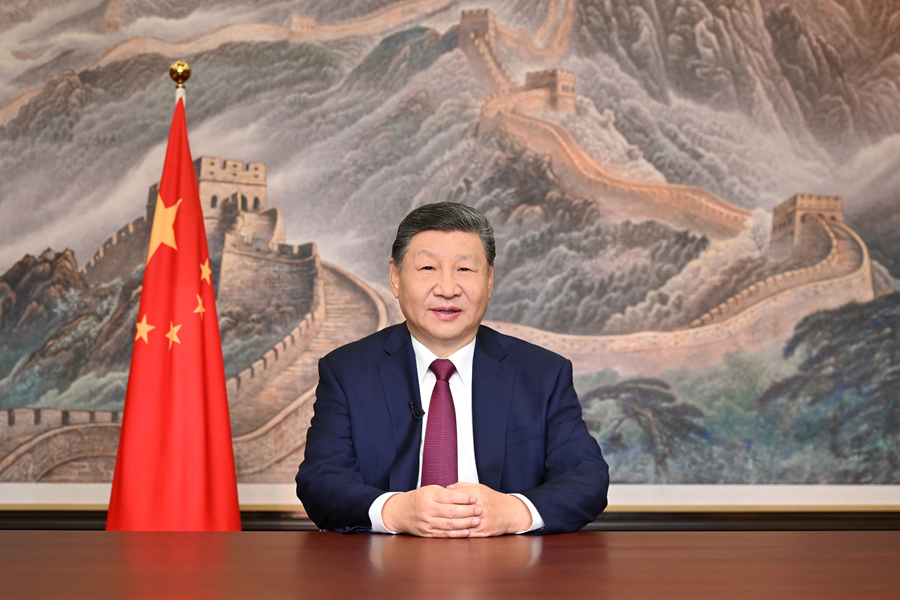
BEIJING, Dec. 31 (Green’post) — Summing up tangible progress in 2025, Chinese President Xi Jinping urged solid steps to write a new chapter in the story of China’s miracle in his 2026 New Year message on Wednesday evening.
Noting that the year 2026 marks the beginning of the 15th Five-Year Plan, Xi said on New Year’s Eve that a successful venture should start with a good plan, and with clear goals set, calling for efforts to promote high-quality development, further deepen reform and opening up across the board, and deliver prosperity for all.
“We should focus on our goals and tasks, boost confidence, and build momentum to press ahead,” Xi said.
SOLID ADVANCES IN 2025
As the year 2025 marks the completion of China’s 14th Five-Year Plan for economic and social development, Xi hailed that the country has met the targets in the plan and made solid advances on the new journey of Chinese modernization.
“Our economic strength, scientific and technological abilities, defense capabilities, and composite national strength all reached new heights,” Xi said.
Describing this year as one that is full of indelible memories, Xi said that the country commemorated the 80th anniversary of the victory of the Chinese People’s War of Resistance Against Japanese Aggression and the World Anti-Fascist War, and established the Taiwan Recovery Day, rallying a mighty force for national rejuvenation.
Xi highlighted that China sought to energize high-quality development through innovation, turning itself into one of the economies with the fastest growing innovation capabilities.
The Chinese people endeavored to nurture their spiritual home with cultural development, as there was a surging public interest in cultural relics, museums, and intangible cultural heritage, and the Chinese culture is shining in even greater splendor, Xi added.
The president said that the Chinese people joined hands to build a better life and enjoyed it together.
“No issue of the people is too small; we care for every leaf and tend every branch in the garden of people’s well-being,” he said. “When the happy hum of daily life fills every home, the big family of our nation will go from strength to strength.”
EMBRACING THE WORLD
In the New Year message, Xi said that over the past year China continued to embrace the world with open arms.
To better address climate change, China announced new Nationally Determined Contributions, Xi said, adding that after announcing the three global initiatives on development, security, and civilization, he put forward the Global Governance Initiative to promote a more just and equitable global governance system.
“China always stands on the right side of history, and is ready to work with all countries to advance world peace and development,” Xi said.
CHINA’S REUNIFICATION UNSTOPPABLE
“We Chinese on both sides of the Taiwan Strait share a bond of blood and kinship. The reunification of our motherland, a trend of the times, is unstoppable,” Xi said.
On Hong Kong and Macao, Xi said the policy of “one country, two systems” should be unswervingly implemented and the two special administrative regions be supported to better integrate into the overall development of the country and maintain long-term prosperity and stability.
PARTY SELF-GOVERNANCE
“Only a strong Communist Party of China can make our country strong,” Xi said in the message.
The Party exercised strict self-governance through credible measures, and promoted self-revolution to fight corruption and advance healthy governance.
“As a result, the conduct of our Party and government steadily improved. We must stay true to our original aspiration and founding mission, and pursue our goal with perseverance and dedication,” Xi said. ■